


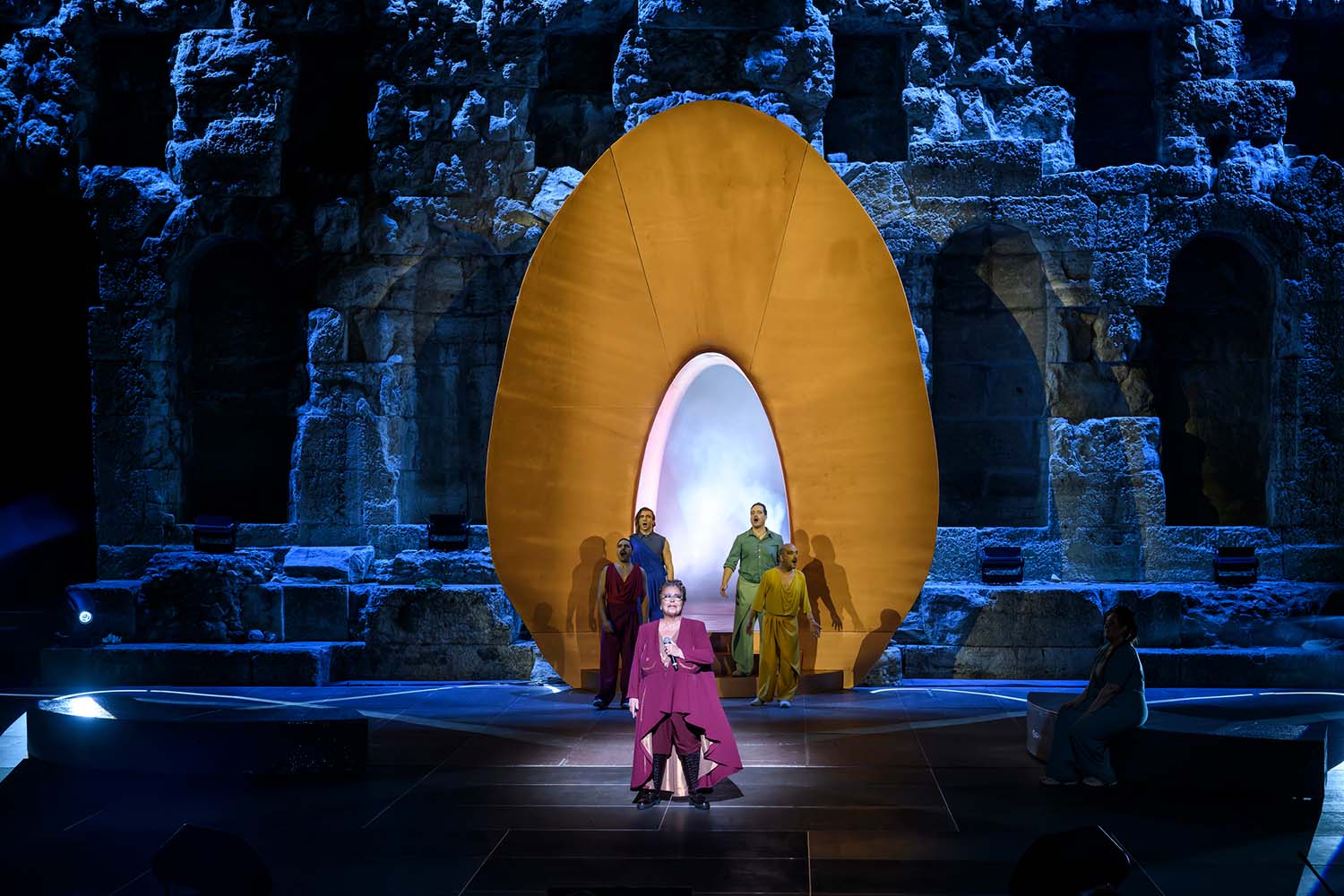
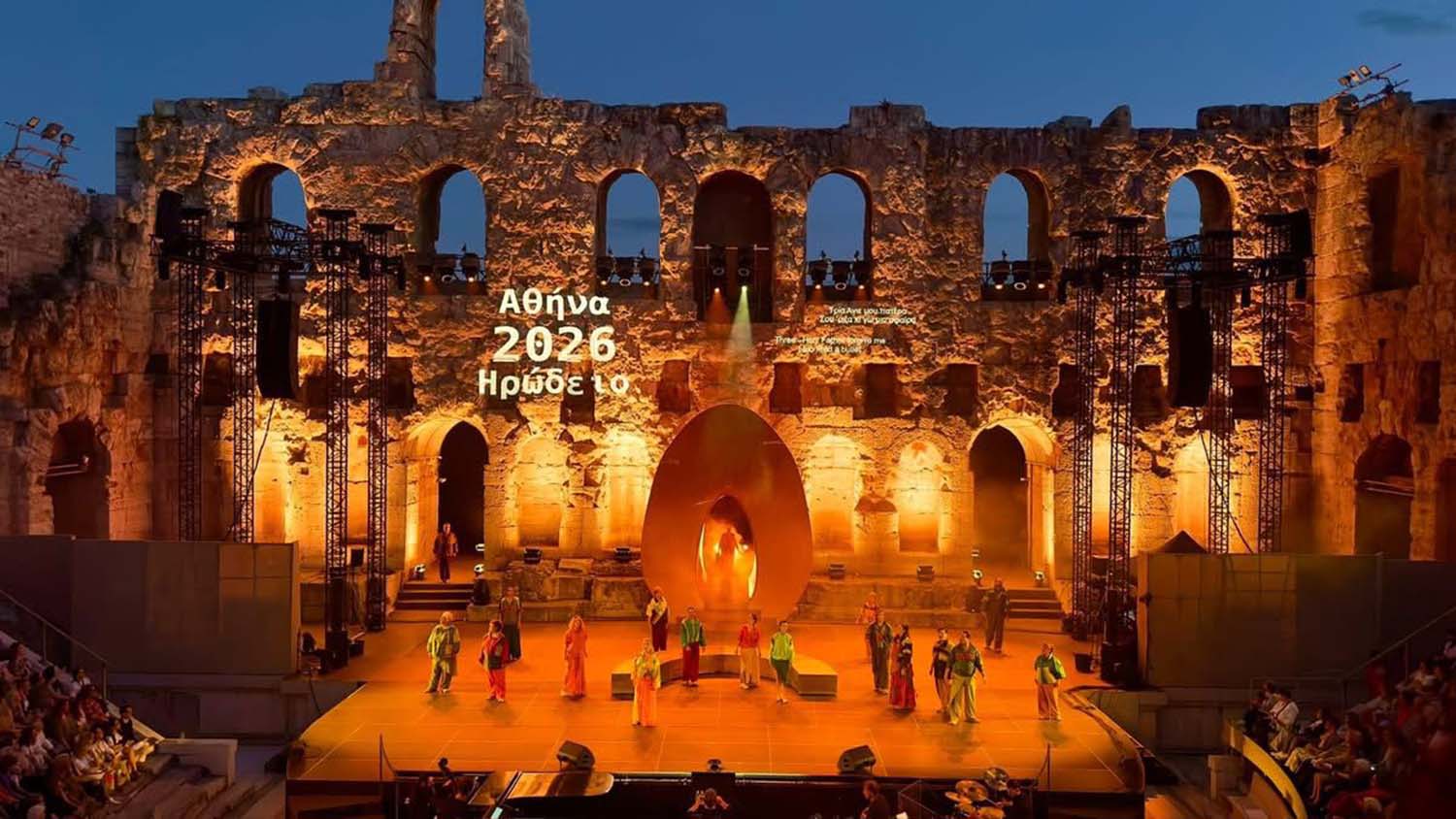
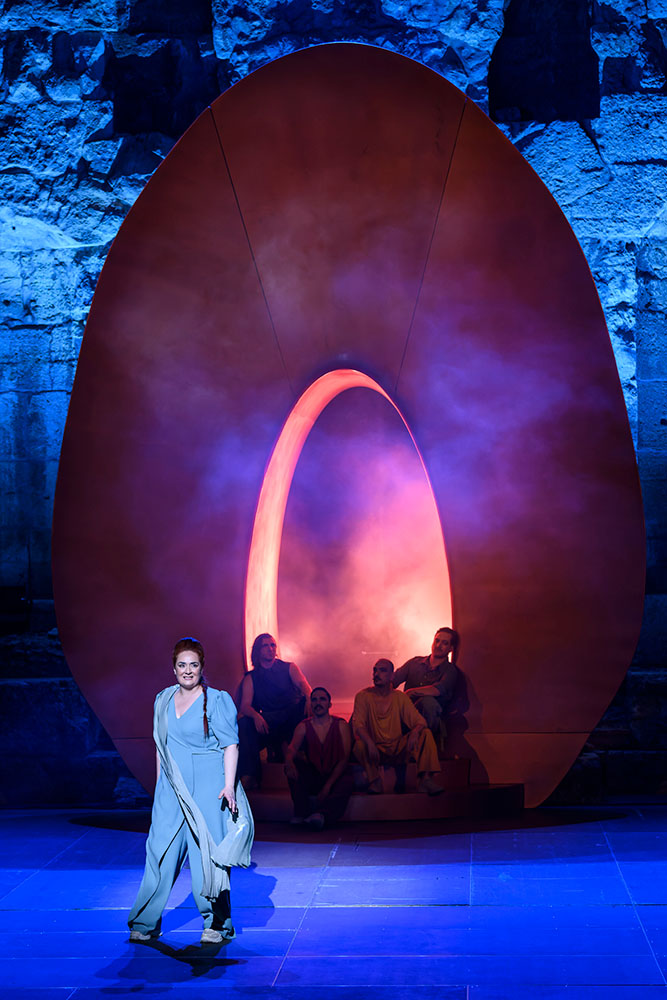
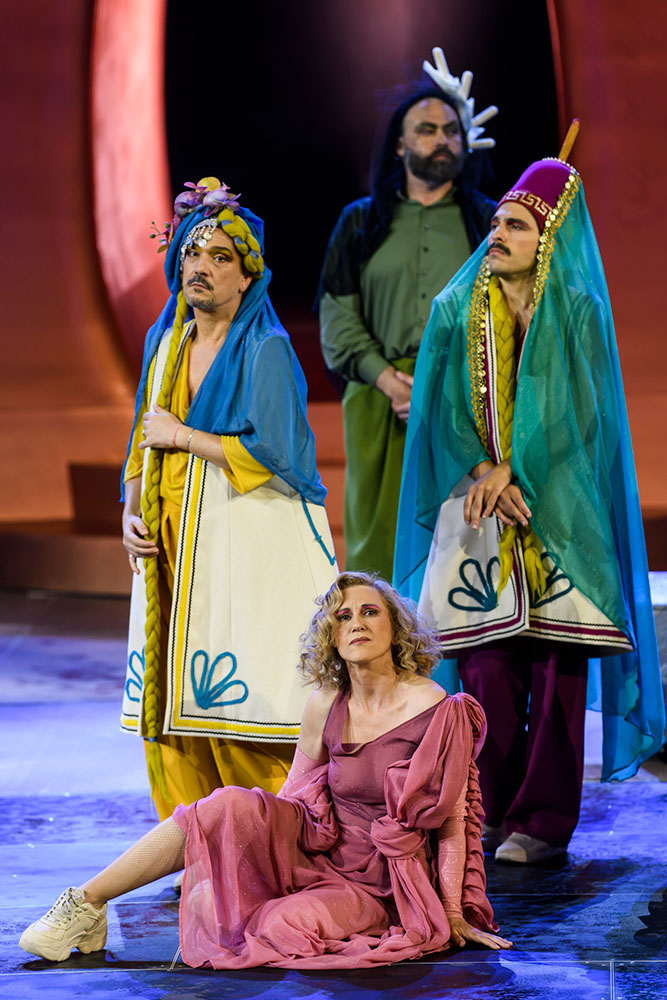


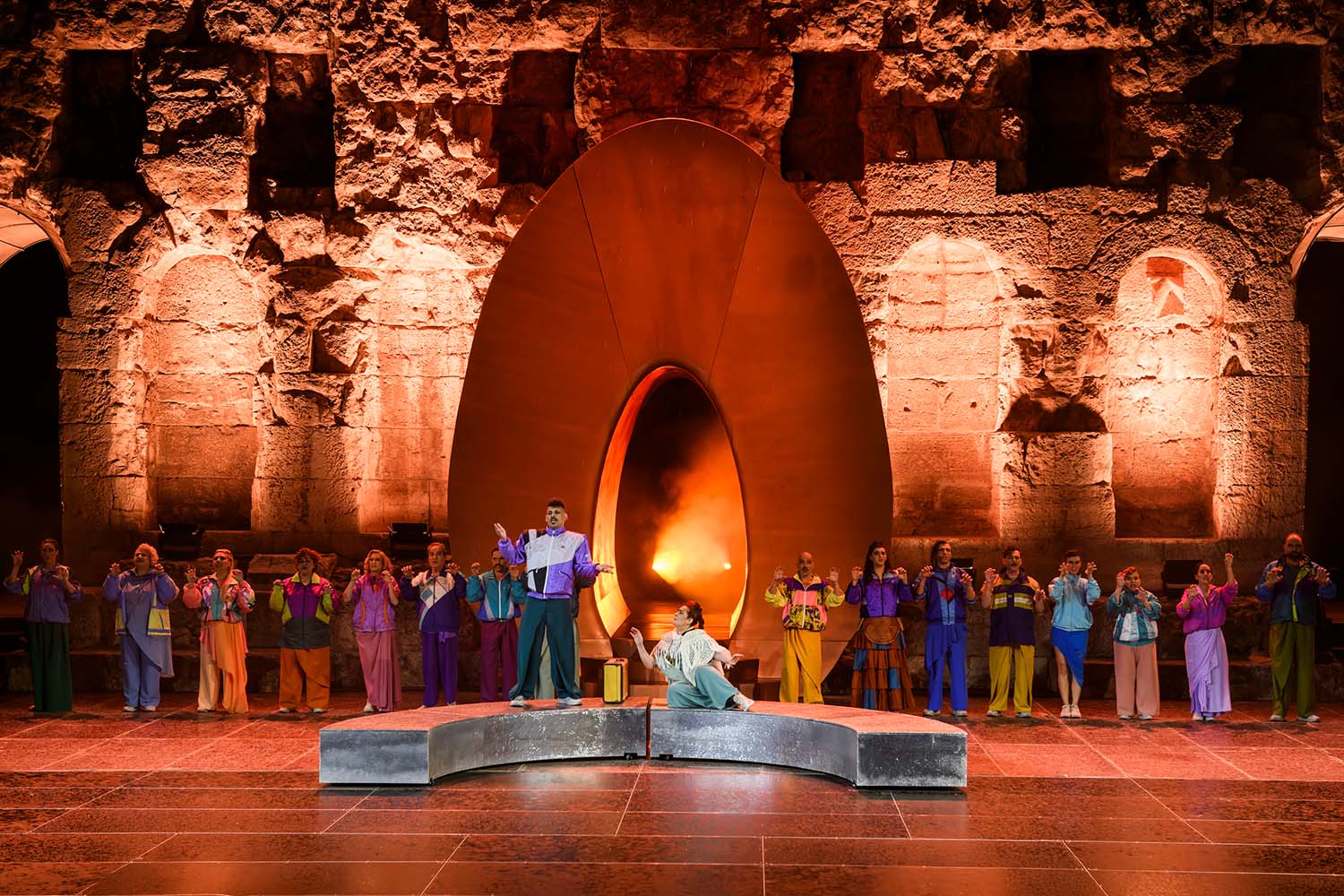
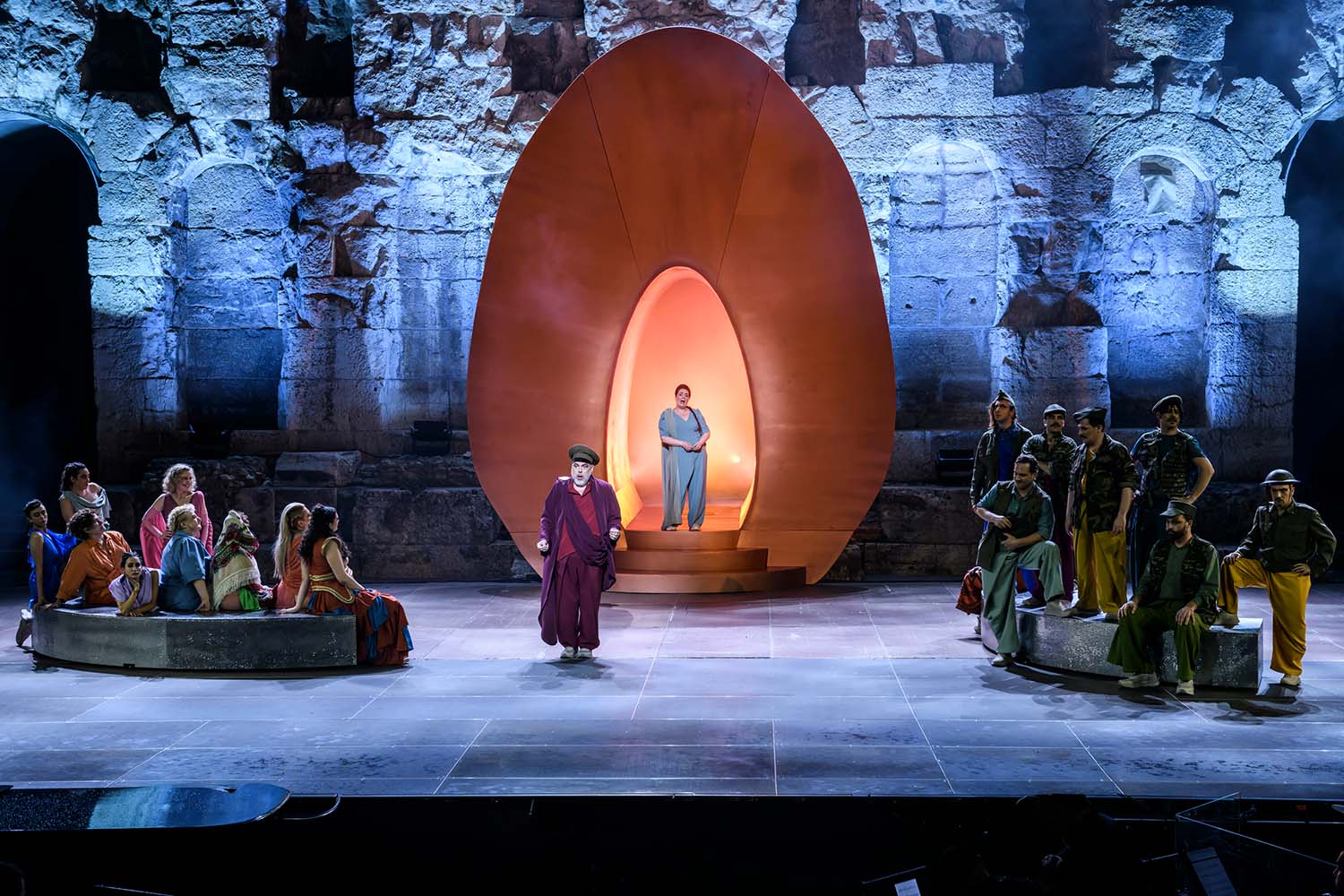
It is therefore a particularly felicitous moment for this adaptation by Stamatis Kraounakis, which leaves us wondering what might emerge from the encounter between the sparkling wit of Aristophanes and the composer’s unbridled musical imagination. Kraounakis forges a polyphonic operetta in which music and speech coexist in equal measure, all tuned to the key of the poet’s merciless satire. By turns lyrical, folk, and sharply cabaret-like, the music becomes the driving force of the action, while the sung theatrical speech completes this Aristophanic rite, casting glances to the present and amplifying the work’s exuberant theatricality. At the same time, the internationally acclaimed scenographer Takis envelops the production in a strikingly contemporary aesthetic that resonates with the work’s historical framework, culminating in an irresistible visual spectacle. On stage, thirty distinguished performers and musicians come together, with the singular presence of Dimitra Galani in the role of the goddess Athena.
In the play, the women seize the Acropolis – where the public treasury is kept –to freeze the war machine helmed by men. For two nights, their marvellous theatrical spectres will hover just above us, allowing this ecstatic stream to flow once more under the baton of Stamatis Kraounakis, surging through the tiers of the theatre, sweeping towards the stage, and once again overturning the certainties of the world.